Pages

Thursday, 27 May 2021

Kate Sheppard

 Kia Ora, 

For today's blog, I will be talking about Kate Sheppard. These past few weeks, we've been working on Protests in New Zealand, and one of them is the women's suffrage that is lead by Kate Sheppard. We also had to read a text, talking about Kate Sheppard. Then there were some questions that must be answered, and activities we had to do. 

Simple information about Kate: 

Women’s suffrage petition 1893: 

Before the protests happened, mans were the only gender that were allowed to vote, women were forbidden to vote whenever there were elections. They claimed that ‘Women’s proper place’ was at home and politics are for men. There was one woman who stood up for what is right and changed the men’s perspective towards women. Kate Sheppard was the leader of the women’s suffrage. They started a movement for this, the petition was signed by over 25,000 women roughly. However, in the end the testimonial appeal assisted with achieving a huge victory. Women’s suffrage movements were extremely important, helpful and effective. New Zealand was the first country allowing women the right to vote. It took them 10 years until they received equal rights with men.


I haven't finished all of the activity, but I'm half way through it. I'll only be showing one activity that I have done for today. The activity is to: Using information you find in the text, design an advertisement to encourage people to sign Kate Sheppard's petition. Include reasons why they should sign the petition. Your advertising needs a title, information and illustrations. 


Thank you for reading my blog, I hope you enjoy. You could give me some helpful, thoughtful and positive feedback. 

Stand up

Hey,

Today, I will be talking about the protest that has happened in New Zealand. We had to read the whole information about the different protests, the main point is to understand what was happening. Then there were questions that should be answered. We did this from the start of the term so by now I've already finished it. 

Stand up

Activities: 


Vocabulary - Using the glossary on page 10 and 11, explain the meaning of the following words: 

  • Suffrage 

  • Union 

  • Watersider. 


Suffrage means the right to vote in public or political elections. 

Union is when a group of workers arrange with employers to have a better pay and better working conditions. 

Watersider means a person who works on a wharf, a landing place for a ship. 


Find specific information - 

1. What is the name of the law that ensures we have a right to protest in NZ? 

A: The name of the law that ensures we have a right to protest in NZ is the Human rights act 1993, and the second one is the New Zealand bill of rights act 1990. 

2. When did soldiers invade Parihaka? 

A: Soldiers invaded Parihaka on November 5 1881. 

3. How many women signed the Women’s Suffrage petition? 

A: There are over 25,000 (roughly) women who signed the Woman’s Suffrage petition. A few mens might also have signed the petition, because it’s ‘not all men’. 

4. What is New Zealand’s most famous hikoi? 

A: New Zealand’s most famous hikoi was a prost movement led by a group called Te Roopu Matakite. 


Make connections - When you read this article, what does it remind you of? Have you ever seen or been involved in a protest? 

  • I have not seen or been involved in a protest. But whenever I hear the word ‘protest’ It always reminds me that humans always have the right to use their voice and speak up for what they believe is right. The freedom of their speech. 


Visual/What do you think - Page 13 poses an interesting scenario: 

“Imagine: You are involved in a dispute with your boss, and the government introduces laws to punish you. One of these laws makes it illegal for people to give you food, even though you have no money.” 

Q: How would you feel in this situation? What would you do? 


  • It actually depends on how the problem started. But in our everyday lives, we all need something to eat or else we’ll starve to death. I would definitely feel frustrated because of how unfair the punishments are. But I will remain calm in these situations, I would peacefully talk to them and try to settle the problem. 


Was the watersides’ protest successful? 

  • In the end, it probably wasn’t what they expected because they suddenly gave in after 151 days and went back to work, they also had trouble getting work because of them getting involved in the dispute. 


Task: Create a billboard to highlight one of the causes mentioned in this article. 


Thank you for reading this blog. I hope you learnt something new, have a great day, goodbye!

Wednesday, 26 May 2021

Safety in the Lab (Science)

 Kia ora everyone,

Today I will be talking about safety in the lab, we are currently in science class. We went through the safety rules that we must follow in lab. 

1. Liquids do not go into the bins, because..... it could leak out in the bin and might make a mess and it might aswell smell. 
2. Solids do not go down the sink because.... it could fill up and will be clog. 
3. Wear safety glasses when you do experiments, because.... chemicals or fire can get into your eyes. 
4. Put your chair under the desk, and stand at the bench when you do experiments, because... when you're carrying something you might then trip and spill all of them in the floor. 
5. Bags do not go on the desks, because... one of your experiment might spill into your bag. 
6. Long hair should be tied back, because... it might go in to one of your experiment and can burn your hair or it'll go into your face's way. 
7. Do not smell the chemicals, because... you might pass out. 
8. Walk, don’t run around the room, because... you might bump others or an equipment that can lead you in trouble, you might aswell break a bone or something. 
9. Do not eat or drink in the lab, because... the desk has been used, they've been dissecting rats, hearts, lungs, the table is clean but it's not exactly clean. 

Thank you for reading my blog, I hope you learn something new today, I'll see you all next time, bye. 

Resilience Board

 Kia ora everyone,

Today I will be talking about what we have been doing on Wananga. Right now, we're working on the resilience board. There are task that we can do and finish, I've finish one of my task which is "Design an A4 digital motivational poster", I designed it on canva. 

Here's the poster I made: 


The next task I'm doing is to "Create a brochure that outlines strategies to help people deal with stress and or places they can go to seek help."


Thank you for reading my blog. I hope you enjoy, you can give me some helpful, thoughtful and a positive feedback. I'll see you all on my next blog, bye. 

Friday, 16 April 2021

Inventions/Tinkercad

Kia Ora everybody,

For today's blog, I will be talking about what we have been doing during Hurumanu 3. We have been focusing on inventions, we learnt the difference between invention and adoption. We were meant to think for an invention that we want to do, but first we thought about the problems. What are the problems that we want to solve? For example, a tangled necklace, it's truly frustrating when you accidentally tangled your necklace, right? We have a problem now, so then we're going to think about solving the problem. I could make a useful things to help me untangle the necklace. 

But my problem was different than that. When I watch something on my phone while charging it, I wasn't able to stand my phone because it always falls, my invention is close to a phone stand (I guess), but not really. Mine is totally different from that. It may be hard to explain, but I drew a picture of it to help me explain it. 

We also had to use this website that helps us for our inventions. We can create a 3D inventions with this website, It's called Tinkercad. I tried the best as I can to make it look the same as what I expect it to look like. 


Well that's all for today. I hope you enjoy, you could give me some helpful, thoughtful and positive feedback. Goodbye! 


Tuesday, 13 April 2021

IU Biography

 Magandang Umaga everybody,

For today's blog I will be talking about a famous musician. On 'counting the beat', we were meant to choose any famous musician and create a biography about them, this should include the information about their: name, age and decade of music, music genre, their famous song, how did they become a successful singer, what is a challenge that they have overcome. We will also have to add pictures and videos.

I created mine using google slide and the person that I choose is a South Korean singer, song writer and an actress, Lee Ji-Eun known as IU. and I'm going to show my presentation to you by clicking this link down below. 

Link

Thank you for reading my blog, I hope you enjoy, you could give me some helpful, thoughtful and a positive feedback. That will be the end of this blog, goodbye. 

Tuesday, 30 March 2021

Ukulele

Kia Ora,

You guys know that I've been posting different types of counting the beat, I've done the topic about guitar an orchestra, there will be more topic that is coming up, but for now I will be focusing about ukulele. 

What is a ukulele? A ukulele is a four nylon stringed musical instrument, it is originally made from Hawaii, it resembles a classical guitar that is made out of woods. English and Hawaiian's pronoucation of "Ukulele" is kinda different, English speakers pronounce it as "you-ka-ley-ley", but Hawaiian pronounce it as "ju-ke-lei-li". I just found out that it is invented in the 1900's, interesting right? 

What do you know about the ukulele? The ukulele has only 4 strings. It's originated from Hawaii. It has some similarities with guitars (not exactly). It is related to the guitar family. It is a stringed instrument, and it has different types and sizes. 

What do you think about ukulele?Not much people knows about ukulele. It's easy to learn especially for little kids. 

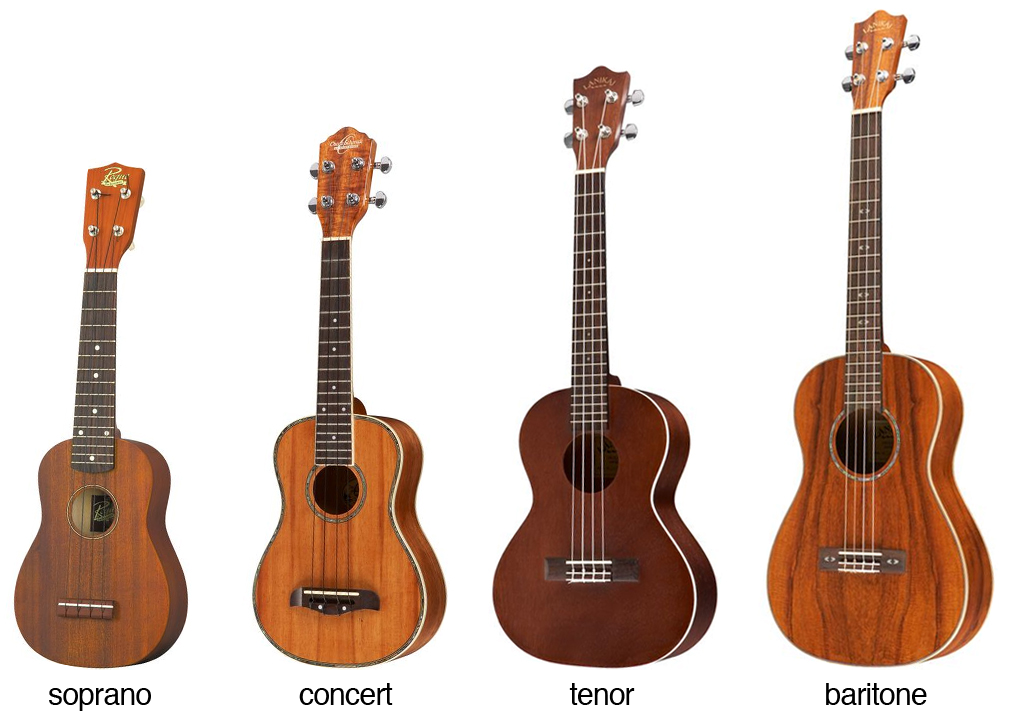
But, did you actually know that ukuleles has many different sizes? I just learnt that today. Different types of ukulele is a Soprano, concert, tenor and a baritone, I just found out about the pineapple ukulele. Parts of ukulele also has: Head, tuning heads, frets, neck, fret markings, body, sound hole, rosette, saddle and a bridge. 

Ukulele Sizes: Soprano, Concert, Tenor & Baritone | Ukulele Tricks


Soprano: A soprano ukulele have been named the "classic ukulele". They have the type of a metalic sound, this is because they have more modest body than a guitar or a baritone and tenor ukulele. 

Concert: A concert ukulele is about three inch longer than the Soprano ukulele, since it is longer than soprano, there will be more tension on the string. 

Tenor: The tenor ukulele is only a bit of spot greater than the concert ukulele. Because it has more frets, you're able to reach the higher notes on the fret boards. 

Baritone: A baritone ukulele is also referred to as "bari". It's the biggest ukulele among all of them. It produces a deeper sound because of its tuning. 

Here are some ukulele glossary: 

Strumming - A way of playing which includes running the finger of the string to rhythm (to make a sound).

Tuner - Turning the tuners fixes or loosens the string permitting them to be tuned to pitch.

Chord - A mix of notes played in harmony, affected on a ukulele by holding strings at different frets. 

Frets - The thin pieces of metal place into the neck of a ukulele to permit you to change notes. 

To be honest, I just found out some of these facts. It's really interesting knowing that there is many types of ukulele, I use to think there's only 1 ukulele. I've learnt playing ukulele when I was in Primary, I joined the strum strike blow festival. I recommend you guys to try playing ukulele if you haven't, it's similar to guitar but a small version with 4 strings. 

Have you played one of these type of ukulele before? Let me know. Thank you for taking your time to read this blog, I really appreciate it. I hope you learn something new today, I would be glad if you could leave a comment/feedback, goodbye.